
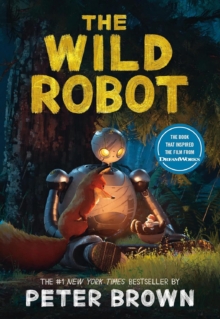
The Wild Robot
Peter Brown
Children Ages 8-12
A raging ocean storm leads to the sinking of a ship carrying hundreds of robots. But one robot doesn’t sink. Her box washes ashore on an island, where she wakes up and begins learning about her surroundings. Roz is her name, and she soon tries to fit in on her new island home. Can Roz learn to adapt to these new surroundings before she is torn apart by wild bears or the harsh island landscape?
Questions Just for Fun
If you were Roz, which animal would you want to befriend first and why?
If you lived on the island, what would you have done to fight off the RICOs?
Questions to Think Critically and Biblically
As Roz learns about the different animals on the island, especially Brightbill, the author continually explains that each animal “was designed to…” (swim, fly, gather, etc.). What are some amazing things your body can do that show it was designed?
Discussion Guide - Discuss different bodily functions, skills, or purposes that demonstrate intelligent design in the human body. (For example, the way hearts pump blood to all organs, the way fingers were designed to bend, hold, and manipulate objects, the way noses were designed to breathe in oxygen, smell, and aid in taste, etc.)
Throughout the book, we see that Roz’s design mirrors the design found in nature. However, unlike the animals, Roz was created by humans. According to the biblical worldview, why can humans purposefully design new creations or craft new inventions?
Discussion Guide - Read Genesis 1:26-28. Discuss how humans have been created in the image of God and tasked to reflect God through filling the earth and subduing it. Discuss how a part of this task involves creating and inventing.
When Roz first arrives on the island, the animals assume she is a monster and try to stay as far from her as possible. However, once they get to know her, they realize she is kind and helpful and want to become friends. How is this similar to when we meet others who are very different from us?
Discussion Guide - Discuss how we often fear what we are not familiar with. However, all humans are created in God’s image. So, the more we get to know one another, the more we come to appreciate the different gifts God has given us.
As the RICOs seek to capture Roz, she begins losing parts. Eventually, she loses both arms and legs. Yet, even without these parts, she is still Roz, still the robot all the animals love. Would the same be true of us? If we lost an arm or a leg, would we still be the same person?
Discussion Guide - Read Genesis 2:7. Discuss how humans are both body and soul. Both our body and soul are valuable and important. In fact, in the resurrection, our souls will be united with resurrected bodies (1 Corinthians 15:53-54). However, we are not just the sum of our body parts. If we lose an arm or a leg, we would still be the same person.
Bonus Question - If the children in your care have gone through Foundation Comparative Worldview Curriculum, ask, “When thinking about how the author describes the animals on the island being designed to do certain things, how is the worldview presented similar to or different from the naturalistic worldview?”
Discussion Guide - Discuss how the naturalistic worldview teaches that life arose accidentally. According to naturalism, there is no design in the universe. Everything is accidental. Though the worldview presented in the book is not distinctly Christian, it aligns with the biblical worldview in affirming that all life is purposefully designed.
Join the Foundation Worldview Book Club
Each month we provide recommended reading with discussion questions for you and your child. Don't miss next month's recommendations from Foundation Worldview!