
September 2026 Book Club Recommendations
Book for Children Ages 8-12
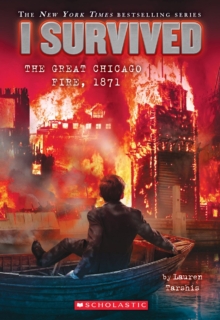
I Survived the Great Chicago Fire, 1871
Lauren Tarshis
Oscar Starling didn’t want to move to Chicago. But when his mom decided to marry Mr. Morrow and sell their Minnesota farm, Oscar had no choice but to trade in farm life for a new life in the city. Oscar expected to hate Chicago, but he didn’t expect to find himself caught in a blazing inferno as the city burned to the ground. Will Oscar escape and be reunited with his mom, or will he be one of the many lost in the fire?
Questions Just for Fun
If you had to move away from your home, where is one place you would like to move and one place you would not like to move?
Take time to research Chicago. What is one site you would like to visit in Chicago?
Questions to Think Critically and Biblically
Throughout the book, Oscar longs to be heroic like his dad. Many children long to be like their parents. According to the biblical worldview, why do most children have this desire?
Discussion Guide - Read 1 John 3:1-2. Discuss how once we have become God's children, the Holy Spirit works to conform us more to God’s image. The human desire for children to be like their parents reflects this spiritual reality for Christians: becoming like our Father, God.
When Oscar first meets Jennie, she tricks him so that a gang of older boys can steal his luggage. We later find out that Jennie is an orphan living on the streets. According to the biblical worldview, did Jennie’s situation make her stealing right?
Discussion Guide - Read 1 Peter 1:14-16. Discuss how God is the standard of holiness. Our situations in life do not make breaking God’s moral law okay.
When Oscar originally chased Jennie, he wanted to have her punished for stealing his things. However, his attitude changed when he realized that Jennie was an orphan taking care of her brother. According to the biblical worldview, was it right for Oscar to have compassion on Jennie and want to help her?
Discussion Guide - Read James 1:27. Discuss how God cares for the orphan and the widow, those who are marginalized by society and at greater risk of harm. Talk about how Oscar’s change in attitude toward Jennie reflects what God has called us to.
Bonus Question - If the children in your care have gone through Foundation Comparative Worldview Curriculum, ask: With what you learned about the Great Chicago Fire, which parts of the fire were caused by natural evil, and which parts were caused by moral evil?
Discussion Guide - Discuss how the drought and wind that caused the fire to spread so quickly were the result of natural evil. The wooden buildings, wooden sidewalks, and other unwise city structure planning that led the entire city to be consumed were the result of moral evil. (To clarify, humans did not purposefully seek to have the city burn, but the unwise construction of the city and lax building codes that led to this disaster are the result of moral evil.)
Bonus Question - If the children in your care have gone through Foundation Comparative Worldview Curriculum, ask: According to the biblical worldview, what is the source of natural evil and the source of moral evil?
Discussion Guide - Review the truths covered in Unit 5, Lesson 1. If you have time, compare and contrast these biblical truths with the alternate worldview beliefs covered in Unit 5, Lesson 2. Then discuss the evidence in Unit 5, Lessons 3 through 5, and how the biblical worldview is the only worldview that provides an explanation for and solution to the sources of both natural and moral evil.
Book for Children Ages 4-7
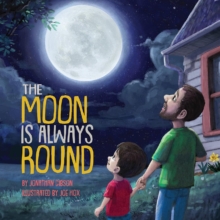
The Moon Is Always Round
Jonathan Gibson
The moon often looks like a sliver or slice of orange. Yet, even when we can only see it in part, the moon is always round. Ben’s dad consistently reminds him of this truth throughout the year. When the family experiences the loss of their youngest child, just before she is born, Ben’s dad reminds Ben that just as the moon is always round, even when we can only see part of it, God is always good, even when we cannot understand what He allows.
Note to Parents: This book is a powerful and age-appropriate reminder that God is always good, even when we cannot understand His goodness. However, because it deals with loss and grief, it would be wise to read this book ahead of time to ensure it is a good fit for your child in this season.
Questions Just for Fun
Look for the moon today. Once you spot it, notice what shape it appears to be. Then, remind yourself that the moon is always round.
Questions to Think Critically and Biblically
What was Ben looking forward to that never happened?
Discussion Guide - Discuss how Ben was looking forward to his little sister coming home from the hospital. However, she died before she was born, so she never came home.
Why did Ben’s dad ask him at the funeral what shape the moon was?
Discussion Guide - Discuss how the moon is always round, even when it looks different to us. Ben’s dad wanted to remind Ben that God is always good, even when we cannot understand why He allows something painful. Read Psalm 145:9.
What is something hard that you do not understand why God has allowed?
Discussion Guide - Spend time thanking God for His goodness and asking that He would help you trust Him through difficult times.
Bonus Question - If you have taken your child through Foundation Attributes of God Curriculum, ask, “Which attributes of God do we see in this book?”
Discussion Guide - Discuss several of God’s incommunicable attributes (infinite, immutable, omniscient, etc.) and communicable attributes (wise, faithful, good, etc.) that are seen in this book. Review several of the games from the curriculum associated with each attribute, as well as the Scripture memory.
Join the Foundation Worldview Book Club
Each month we provide recommended reading with discussion questions for you and your child. Don't miss next month's recommendations from Foundation Worldview!